
A powerful story can do more than inform people. It can draw attention to an overlooked crisis, amplify the experiences of affected communities and help the public better understand complex humanitarian and health challenges.
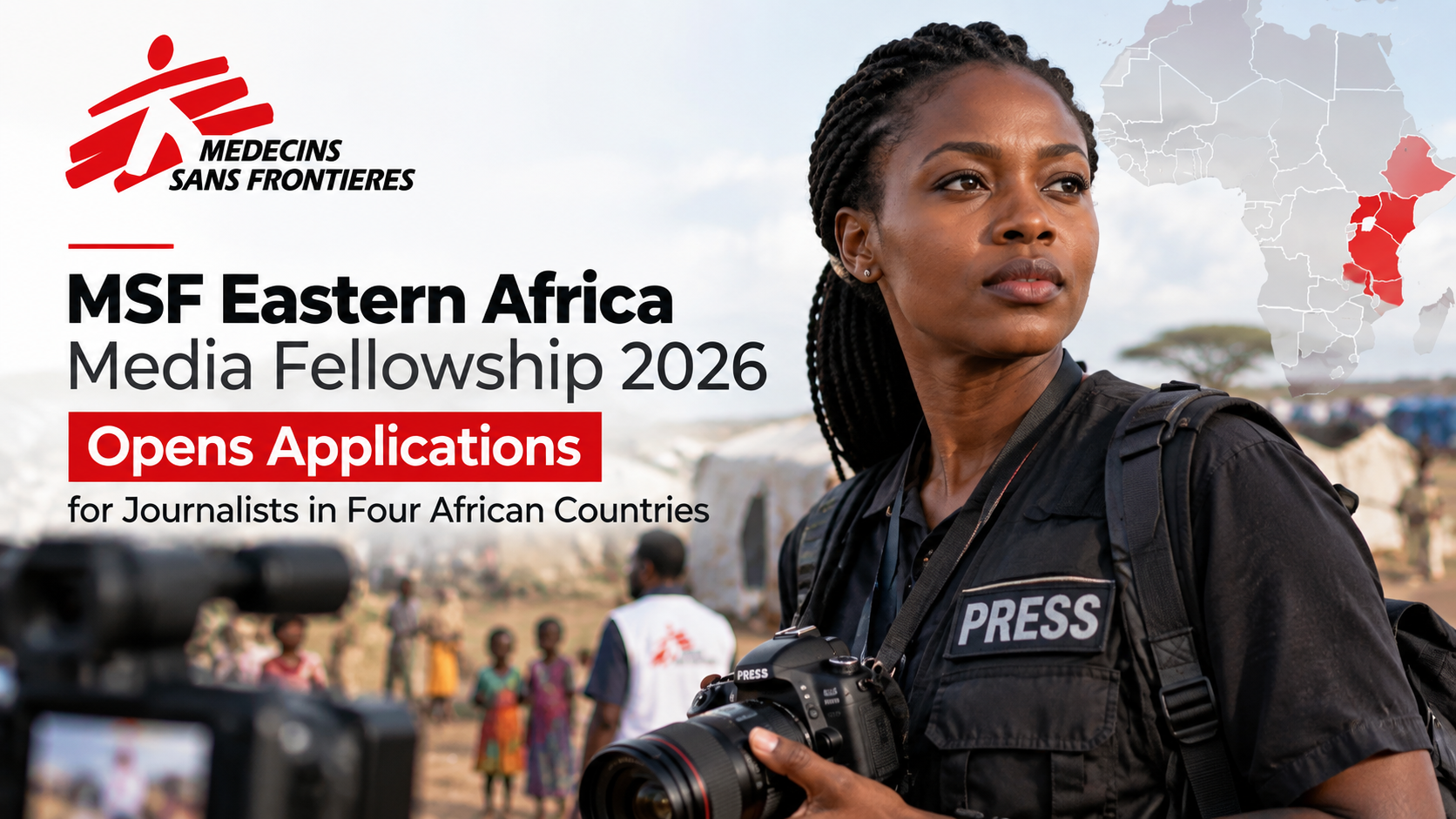
For journalists working across Eastern Africa, the MSF Eastern Africa Media Fellowship 2026 offers an opportunity to strengthen their reporting skills while gaining closer exposure to humanitarian operations, medical expertise and field-based storytelling.
Organised by Médecins Sans Frontières (MSF) Eastern Africa, the fellowship is designed for journalists who want to produce meaningful stories about humanitarian and health issues affecting communities across the region.
Selected participants will receive specialised journalism training, access to relevant MSF projects and experts, and support for reporting assignments.
The 2026 fellowship is open to eligible journalists based and publishing in Kenya, Ethiopia, South Sudan and Tanzania.
Application Deadline: September 8, 2026
For journalists passionate about humanitarian reporting, health journalism, development issues and telling stories that can contribute to public understanding, this fellowship provides an opportunity to develop both professional skills and impactful reporting.
MSF Eastern Africa Media Fellowship 2026: Quick Overview
Programme: MSF Eastern Africa Media Fellowship 2026
Organisation: Médecins Sans Frontières (MSF) Eastern Africa
Programme Type: Journalism Fellowship and Training
Target Audience: Journalists
Eligible Countries: Kenya, Ethiopia, South Sudan and Tanzania
Minimum Experience: Three years of journalism experience
Published Work: At least three published stories
Reference Letter: Required
Key Support: Journalism training, access to MSF projects and experts, and project-visit costs
Application Status: Open
Application Deadline: September 8, 2026
About the MSF Eastern Africa Media Fellowship
The MSF Eastern Africa Media Fellowship was created to strengthen journalists’ ability to report accurately, responsibly and compellingly on humanitarian and health issues affecting communities in Eastern Africa.
Humanitarian emergencies can involve complex issues such as conflict, displacement, infectious diseases, malnutrition and limited access to healthcare. Reporting on these subjects requires more than simply gathering information.
Journalists need to understand the wider humanitarian context, engage responsibly with affected communities and communicate complicated issues in ways that audiences can understand.
The fellowship brings participating journalists closer to MSF’s field operations and medical expertise.
Through training and practical reporting opportunities, fellows can develop a deeper understanding of humanitarian work while producing stories that highlight important issues and communities.
The programme also seeks to strengthen relationships between humanitarian organisations and media professionals by creating opportunities for informed and evidence-based reporting.
How Does the MSF Media Fellowship Work?
The fellowship follows a practical structure that takes participants from journalism training to story development and supported reporting.
1. Full-Day Journalism Workshop
Successful applicants will first participate in a full-day journalism workshop facilitated by an experienced media professional.
The workshop is designed to strengthen participants’ understanding of humanitarian reporting and provide practical approaches for producing responsible, accurate and impactful stories.
Participants can use the experience to improve how they investigate, develop and communicate stories involving humanitarian and health issues.
2. Development and Submission of Story Pitches
Following the journalism workshop, participating journalists will develop and submit story pitches based on humanitarian issues they are interested in exploring.
This stage gives journalists an opportunity to identify significant stories and propose reporting projects capable of contributing to public understanding.
A strong story pitch should demonstrate why the issue matters, who is affected and why the proposed reporting can provide meaningful insight.
3. Supported Humanitarian Reporting
Journalists whose story pitches are selected will receive support to undertake reporting assignments.
Fellows will have access to relevant MSF projects and experts, providing opportunities to better understand humanitarian responses and obtain relevant information for their stories.
The fellowship therefore moves beyond classroom-based journalism training by connecting professional development with practical reporting.
What Does the MSF Eastern Africa Media Fellowship Provide?
Selected journalists can benefit from several forms of professional and practical support.
These include:
- Training from experienced media and communication professionals.
- Practical guidance on humanitarian storytelling.
- Access to relevant MSF projects.
- Access to MSF experts and technical perspectives.
- Support for project-related visits.
- Exposure to humanitarian field operations.
- Opportunities to develop impactful stories.
- Greater understanding of health and humanitarian issues.
- Professional development in specialised reporting.
The programme can be particularly relevant to journalists interested in health journalism, humanitarian reporting, development journalism, conflict reporting, displacement, emergency response and public health.
Who Can Apply for the MSF Eastern Africa Media Fellowship?
The fellowship is designed for journalists who are based in and publishing in Eastern Africa.
For the 2026 programme, eligible applicants should be working in or reporting from:
- Kenya
- Ethiopia
- South Sudan
- Tanzania
Applicants should also meet the programme’s professional requirements.
Applicants should have:
- At least three years of journalism experience.
- A reference letter.
- At least three published stories demonstrating their reporting experience.
- Affiliation with a media organisation or accreditation with the relevant media regulator in their country.
- Willingness to travel for fellowship-related reporting assignments.
- Commitment to publishing approved stories within the required fellowship timelines.
Applicants should carefully review the official requirements before submitting their applications.
Why Apply for the MSF Eastern Africa Media Fellowship?
For journalists covering humanitarian and health issues, access to reliable information and specialist expertise can make a significant difference to the quality of their reporting.
A journalist may encounter a story about displacement, an infectious disease outbreak or limited access to healthcare. Understanding the underlying humanitarian response can help transform a basic news report into a more comprehensive and contextual story.
The MSF Eastern Africa Media Fellowship provides an opportunity to develop this type of reporting.
Participants can learn from media professionals, interact with humanitarian experts and gain exposure to field operations while developing stories focused on important regional challenges.
The experience can also help journalists expand their professional networks and strengthen their storytelling capabilities.
Strengthening Humanitarian and Health Journalism in Eastern Africa
Humanitarian crises can affect communities for months or even years, yet some receive limited sustained media attention.
Journalists play an important role in ensuring that these issues remain visible.
Through stronger reporting, journalists can help audiences understand:
- The experiences of displaced communities.
- Healthcare challenges.
- Humanitarian emergencies.
- Infectious disease concerns.
- Malnutrition.
- Access to medical services.
- Emergency response efforts.
- Challenges facing vulnerable communities.
The MSF fellowship supports journalists interested in exploring these subjects through responsible, evidence-based storytelling.
Countries Covered by the MSF Media Fellowship 2026
The 2026 fellowship covers four Eastern African countries.
Kenya
Journalists based and publishing in Kenya, Ethiopia, South Sudan and Tanzania can apply, subject to the program’s eligibility requirements.
What Kind of Stories Can Journalists Develop?
The fellowship is centred on humanitarian and health reporting.
Potential areas of interest may include stories relating to:
- Public health.
- Healthcare access.
- Humanitarian emergencies.
- Conflict and displacement.
- Infectious diseases.
- Malnutrition.
- Vulnerable communities.
- Emergency medical response.
- Humanitarian intervention.
- Community health challenges.
The strongest story ideas should be relevant to the communities being covered and capable of providing meaningful public understanding.
How to Prepare a Strong Fellowship Application
With the deadline approaching, journalists should avoid leaving their application until the final hours.
Here are practical ways to prepare.
1. Prepare Your Published Stories
The application requires at least three published stories demonstrating your journalism experience.
Select work that best reflects your reporting ability, particularly stories that demonstrate investigative thinking, human-interest storytelling, health reporting, humanitarian coverage or strong community engagement.
2. Prepare Your Reference Letter
A reference letter is required.
Choose someone who can credibly speak about your professional journalism experience and ability.
3. Clearly Demonstrate Your Experience
Don’t simply state that you are a journalist.
Show the kind of journalism you do, the communities or issues you cover and the experience you have gained over the years.
4. Think About Your Story Pitch
Consider humanitarian or health issues that deserve greater attention.
A good story idea should have a clear subject, affected communities, public relevance and a realistic reporting approach.
5. Confirm Your Availability
The fellowship may require participants to travel for reporting assignments.
Applicants should therefore make sure they can meet the programme’s participation and reporting commitments.
Application Deadline
The application deadline for the MSF Eastern Africa Media Fellowship 2026 is September 8, 2026.
With the deadline approaching, eligible journalists should prepare their published stories, reference letter, professional information and other required application materials as early as possible.
MSF Eastern Africa Media Fellowship 2026 at a Glance
| Programme Details | Information |
|---|---|
| Programme | MSF Eastern Africa Media Fellowship 2026 |
| Organisation | Médecins Sans Frontières Eastern Africa |
| Target Group | Journalists |
| Eligible Countries | Kenya, Ethiopia, South Sudan, Tanzania |
| Experience | Minimum 3 years |
| Published Work | At least 3 published stories |
| Reference | Required |
| Training | Full-day journalism workshop |
| Reporting Support | Available for selected story pitches |
| Project Access | MSF projects and experts |
| Travel Support | Project-visit costs |
| Application Status | Open |
| Deadline | September 8, 2026 |
Frequently Asked Questions
Who can apply for the MSF Eastern Africa Media Fellowship?
The fellowship is intended for journalists based in and publishing in Eastern Africa, specifically those working in Kenya, Ethiopia, South Sudan and Tanzania for the 2026 programme.
How much journalism experience is required?
Applicants should have at least three years of journalism experience.
How many published stories are required?
Applicants should provide at least three published stories demonstrating their journalism experience.
Is a reference letter required?
Yes. A reference letter is among the stated application requirements.
Will fellows receive journalism training?
Yes. Successful applicants will participate in a full-day journalism workshop facilitated by a media professional.
Will journalists have access to MSF experts?
Selected participants can receive access to relevant MSF projects and experts as part of the supported reporting process.
Does the fellowship support reporting-related travel?
The programme provides support for costs associated with project visits, according to the fellowship information.
Which countries are eligible?
The 2026 programme covers Kenya, Ethiopia, South Sudan and Tanzania.
When is the application deadline?
Applications close on September 8, 2026.
Final Thoughts
The MSF Eastern Africa Media Fellowship 2026 offers journalists an opportunity to strengthen their professional skills while developing stories around some of the region’s most important humanitarian and health challenges.
The value of the programme extends beyond journalism training. Participants can gain exposure to humanitarian operations, engage with experts, develop story pitches and receive support for selected reporting assignments.
For journalists in Kenya, Ethiopia, South Sudan and Tanzania with at least three years of experience and a genuine interest in humanitarian or health reporting, the fellowship could provide valuable professional development and reporting experience.
If you meet the eligibility requirements, prepare your published work and reference letter carefully and submit your application before the September 8, 2026 deadline.
Interested journalists should review the official MSF fellowship requirements and application portal before submitting their application.
Editorial note: This article is based on the fellowship information provided for the 2026 MSF Eastern Africa Media Fellowship. Applicants should confirm the latest requirements and application instructions on the official MSF platform before applying.
