

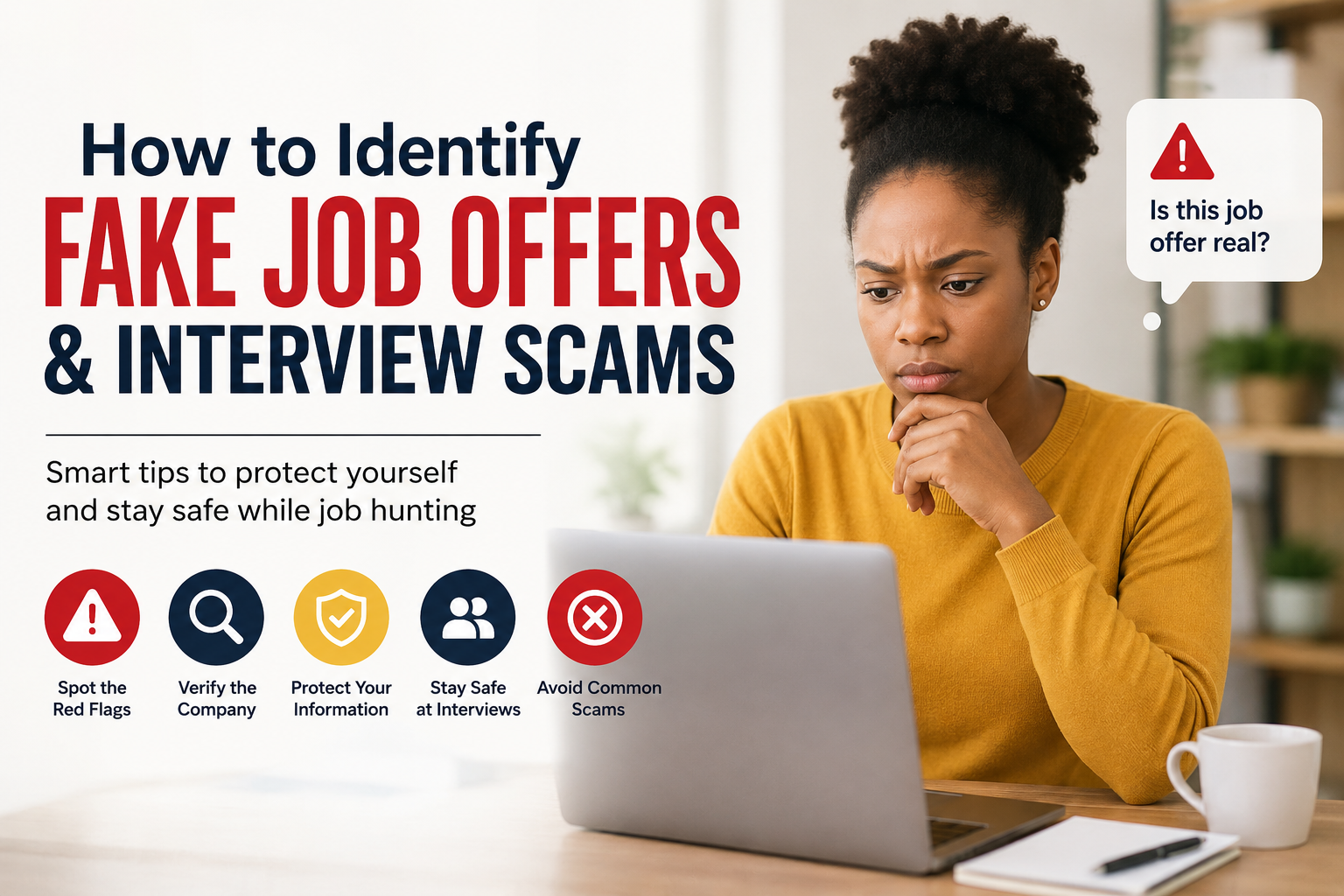
Searching for a job can be exciting, but it also comes with risks. As more recruitment processes move online and fraudsters become increasingly sophisticated, fake job offers and interview scams have become a growing concern for job seekers around the world.
From fraudulent recruitment agencies to fake company websites and phishing emails, employment scams are costing thousands of people their money, personal information, and peace of mind. Many victims are targeted simply because they are eager to secure their next career opportunity.
At Opportunity with Igbinovia, our mission goes beyond sharing genuine jobs, scholarships, grants, internships, and fellowships. We are equally committed to helping job seekers stay informed, make smarter career decisions, and avoid common recruitment scams.
This guide explains the warning signs of fake job offers, how to verify legitimate employers, and the practical steps you can take to stay safe throughout your job search.
Why Fake Job Offers Are Increasing
The internet has made it easier than ever for employers and candidates to connect. Unfortunately, it has also made it easier for scammers to impersonate legitimate companies.
Fraudsters often copy company logos, create convincing websites, and send professional-looking emails that appear authentic. Some even conduct fake interviews to gain trust before requesting money or sensitive personal information.
Their goal is usually one or more of the following:
- Steal your personal identity.
- Collect application or training fees.
- Obtain your banking details.
- Gain access to your email or social media accounts.
- Exploit desperate job seekers through false promises.
Understanding these tactics is the first step toward protecting yourself.
Common Warning Signs of Fake Job Offers
1. The Job Description Is Vague
Legitimate employers clearly explain the role, responsibilities, required qualifications, salary expectations (where applicable), and company information.
Be cautious if the advertisement:
- Contains very little information.
- Uses poor grammar or spelling.
- Requests your photographs without explaining why.
- Does not mention the company name.
- Provides no physical address or official website.
Transparency is one of the strongest indicators of a genuine employer.
2. Unrealistic Salary Promises
Everyone wants a well-paying job, but unrealistic salaries should immediately raise questions.
Examples include:
- Entry-level positions offering exceptionally high salaries.
- Jobs requiring little or no experience while promising executive-level income.
- Immediate hiring without assessing your qualifications.
If an offer seems too good to be true, take time to verify it before proceeding.
3. Interviews Held in Suspicious Locations
Most reputable organizations conduct interviews at:
- Their registered office.
- Recognized business centres.
- Verified virtual meeting platforms.
Exercise caution if you are asked to attend interviews in:
- Hotels (unless you applied to a hospitality business hosting recruitment there).
- Residential apartments.
- Empty buildings.
- Remote or isolated locations.
Always confirm the company’s official address before attending.
4. Requests for Money
This remains one of the biggest warning signs.
Legitimate employers do not charge applicants for:
- Job applications.
- Recruitment processing.
- Interview scheduling.
- Employment letters.
- Medical examinations arranged by the employer.
- Mandatory training before employment.
Whenever someone asks you to pay before getting hired, you should assume it is a scam until proven otherwise.
5. Pressure to Make Immediate Decisions
Scammers often create unnecessary urgency.
They may tell you:
- “This offer expires today.”
- “Pay now or lose the opportunity.”
- “Only a few positions remain.”
Real employers understand that candidates may need time to review employment offers and ask questions.
Never allow pressure to replace proper verification.
6. Poor Communication
Pay attention to how recruiters communicate.
Warning signs include:
- Generic email addresses instead of company domains.
- Numerous spelling mistakes.
- Unprofessional messages.
- Inconsistent company information.
- Refusal to answer reasonable questions.
Professional recruiters usually communicate clearly and consistently.
How to Verify a Job Offer Before Accepting It
Taking a few minutes to research a company can save you from serious problems later.
Visit the Official Website
Check whether the company has:
- A professional website.
- Contact information.
- Physical office locations.
- Clear information about its services.
Search for Company Reviews
Read reviews from:
- Current employees.
- Former employees.
- Industry professionals.
While individual reviews should be viewed critically, repeated complaints about recruitment scams deserve attention.
Check Professional Platforms
Many legitimate employers maintain professional profiles that provide information about their operations, leadership, and recruitment activities.
Compare the information provided in the job advertisement with publicly available company information.
Verify Contact Details
Ensure:
- Email addresses match the company’s domain.
- Phone numbers are legitimate.
- Office addresses can be verified.
Small inconsistencies can reveal fraudulent recruiters.
Personal Safety During Interviews
Your safety should always come first.
Before attending any interview:
- Inform a trusted friend or family member about your plans.
- Share the interview address and contact details.
- Tell someone when you expect to return.
- Keep your phone charged.
- Arrange reliable transportation.
If you feel uncomfortable during an interview, leave immediately.
No job opportunity is worth risking your safety.
Protect Your Personal Information
Be careful about the information you share during the recruitment process.
Avoid sending:
- Bank account details.
- Debit or credit card information.
- Internet banking credentials.
- Passwords.
- National identification documents unless genuinely required at the appropriate stage.
Even when sharing your CV, make sure it contains only information relevant to your job application.
What to Do If You Suspect a Job Scam
If something feels suspicious:
- Stop communicating with the recruiter.
- Do not send money.
- Do not provide additional personal information.
- Save screenshots and email conversations.
- Report the job advertisement to the platform where you found it.
- Warn others so they do not become victims.
Quick action can prevent further harm.
Best Practices for Safe Job Hunting
Following a few simple habits can significantly reduce your risk.
- Apply through trusted job platforms.
- Research every employer.
- Read job descriptions carefully.
- Avoid offers that promise unrealistic earnings.
- Never pay recruitment fees.
- Keep family or friends informed about interviews.
- Trust your instincts whenever something feels wrong.
These habits not only improve your safety but also help you focus on genuine career opportunities.
Why Staying Informed Matters
Employment scams continue to evolve because scammers constantly change their tactics.
The more informed you are, the easier it becomes to identify suspicious behaviour before it becomes a problem.
Knowledge remains one of the strongest tools for protecting yourself during your job search.
Final Thoughts
Finding the right job requires patience, preparation, and caution. While thousands of legitimate employers recruit every day, there are also individuals looking to exploit unsuspecting job seekers.
Take time to research every opportunity, verify company information, and prioritize your personal safety throughout the recruitment process.
At Opportunity with Igbinovia, we remain committed to publishing verified opportunities, sharing trusted career resources, and helping professionals make informed career decisions.
Stay alert, stay informed, and never compromise your safety for a job opportunity.
Frequently Asked Questions (FAQs)
How can I identify a fake job offer?
Look out for vague job descriptions, unrealistic salaries, requests for upfront payments, interviews in suspicious locations, poor communication, and pressure to act immediately.
Should I pay money to get a job?
No. Legitimate employers do not require candidates to pay application, recruitment, interview, or employment fees.
Is it safe to attend an interview alone?
If possible, inform someone you trust about your interview details. When the location is unfamiliar, having someone accompany you to the area can provide an added layer of security.
What should I do if I receive a suspicious job offer?
Stop communicating with the recruiter, avoid sending money or sensitive information, preserve any evidence, and report the listing to the platform where it was posted.
How can I verify that a company is genuine?
Research the company’s official website, verify its contact information, review its online presence, and compare the details provided in the job advertisement with publicly available information.
Key Takeaways
- Research every employer before applying.
- Never pay recruitment or interview fees.
- Be cautious of unrealistic salaries and vague job descriptions.
- Protect your personal information.
- Share interview details with someone you trust.
- Trust your instincts and leave any situation that feels unsafe.
Your next job could be the opportunity that changes your life—but only if it comes from a legitimate employer. Stay informed, stay safe, and keep pursuing opportunities with confidence.
