


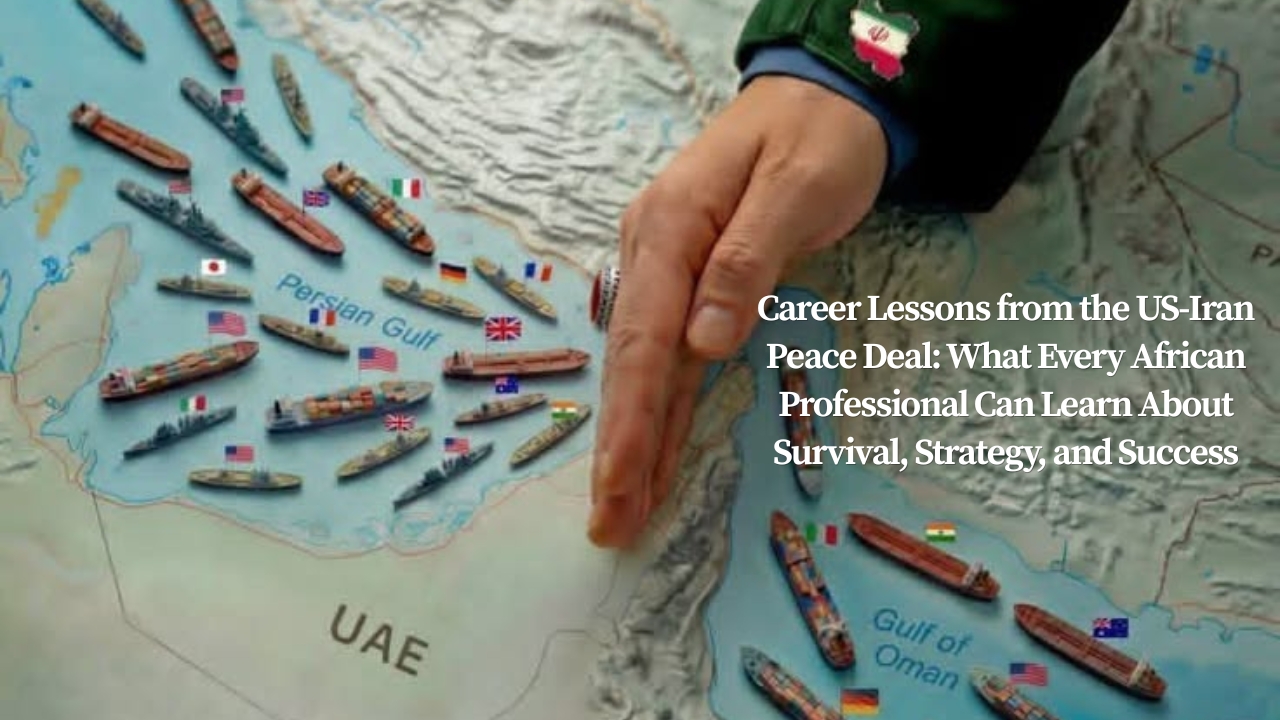
The Unexpected Career Lessons Hidden in Global Conflict and Diplomacy
The recent US-Iran peace agreement, which brought a pause to months of conflict and reopened diplomatic conversations, has become one of the most discussed international developments of 2026. While geopolitical analysts focus on military strategy and foreign policy, there are powerful career lessons hidden beneath the headlines that every African professional, entrepreneur, student, and job seeker can learn from.
Whether you are building a business in Lagos, searching for remote jobs from Nairobi, studying in London, working in Dubai, or pursuing opportunities in Canada, the principles that shape peace negotiations are often the same principles that shape successful careers.
The reality is simple: careers are not won by talent alone. They are won by strategy, relationships, resilience, adaptability, and the ability to navigate uncertainty.
Here are some of the most important career lessons from the US-Iran peace process.
1. The Strongest People Know When to Negotiate
One of the biggest lessons from the peace agreement is that even powerful nations eventually realize that endless conflict is costly. After months of economic disruption and uncertainty, both sides returned to the negotiating table because continued confrontation was no longer sustainable.
Many Africans make the mistake of treating every workplace disagreement as a battle that must be won.
In reality:
- Great leaders negotiate.
- Great employees communicate.
- Great entrepreneurs collaborate.
Your career can stagnate when pride prevents productive conversations.
Sometimes the promotion you want, the business partnership you need, or the opportunity you’re seeking is only one conversation away.
2. Relationships Are More Valuable Than Temporary Victories
One reason global peace deals matter is that nations understand they must continue living and trading together after the conflict ends.
The same principle applies to careers.
The manager who criticized your work today may become a CEO tomorrow.
The colleague you ignored today may become a hiring manager next year.
The customer you disappointed today may influence dozens of future opportunities.
In today’s connected world, professional relationships are career capital.
Africans in the diaspora often find jobs through referrals rather than online applications. Similarly, many successful entrepreneurs across Africa grow their businesses through trust networks and referrals.
Your network remains one of your most valuable career assets.
3. Economic Reality Eventually Wins
Analysts note that economic pressures played a major role in encouraging both sides toward compromise and renewed discussions. The impact on oil markets, trade routes, and economic stability became too significant to ignore.
This lesson applies directly to personal careers.
Many people make career decisions based solely on emotions:
- “I don’t like this job.”
- “I don’t feel motivated.”
- “I want immediate success.”
While passion matters, economic reality matters too.
Before leaving a job, changing industries, or launching a business, ask:
- Does this decision improve my long-term financial future?
- Does it create sustainable opportunities?
- Will this skill remain valuable in five years?
Successful professionals balance passion with practical thinking.
4. Adaptability Is More Powerful Than Strength
One striking aspect of the peace process is how both sides adjusted their positions over time. What seemed impossible at the beginning eventually became negotiable.
The workplace operates the same way.
The African job market is changing rapidly because of:
- Artificial Intelligence (AI)
- Remote work
- Digital transformation
- Global freelancing
- Automation
The professionals who thrive are not necessarily the strongest.
They are the most adaptable.
The accountant who learns data analytics.
The teacher who learns digital content creation.
The marketer who understands AI tools.
The entrepreneur who embraces technology.
Adaptability is becoming the most important career skill of the modern economy.
5. Peace Creates Opportunities That Conflict Cannot
When conflict decreases, investment increases.
Businesses expand.
Trade grows.
Employment opportunities emerge.
The same principle applies to personal development.
Many people live in constant internal conflict:
- Fear versus ambition
- Doubt versus confidence
- Comfort versus growth
As long as you remain trapped in these battles, progress becomes difficult.
Career growth often begins when you make peace with:
- Starting small
- Learning new skills
- Making mistakes
- Reinventing yourself
Growth requires moving forward despite uncertainty.
6. Long-Term Thinking Beats Short-Term Reactions
The peace agreement did not emerge overnight. It was the result of months of negotiations, setbacks, discussions, and strategic planning.
Many young professionals want immediate results:
- Instant promotions
- Instant wealth
- Instant recognition
But meaningful success is usually the product of consistent effort over many years.
The most successful Africans globally often spent years building expertise before achieving visible success.
Your career should be viewed as a marathon, not a sprint.
Ask yourself:
- Where do I want to be in five years?
- What skills should I build today?
- What relationships should I nurture now?
Long-term thinking produces extraordinary outcomes.
7. Stability Attracts Opportunities
Investors prefer stable environments.
Employers prefer dependable employees.
Customers prefer reliable businesses.
Nations seek peace because stability attracts growth.
Your personal brand should communicate stability.
This means:
- Meeting deadlines
- Keeping commitments
- Delivering quality work
- Acting professionally
- Managing emotions wisely
People invest in people they trust.
Trust is built through consistency.
8. Learning Never Stops
One lesson emerging from global events is that the world changes quickly.
Industries change.
Technology changes.
Economic conditions change.
Career strategies must evolve too.
The professionals who remain relevant are lifelong learners.
In 2026, some of the most in-demand skills include:
- Artificial Intelligence
- Data Analytics
- Cybersecurity
- Digital Marketing
- Product Management
- Software Development
- Project Management
- Financial Analysis
Continuous learning is no longer optional.
It is a survival strategy.
Final Thoughts
The US-Iran peace agreement reminds us that progress often comes through strategy, communication, patience, and adaptability rather than confrontation alone.
For Africans across the continent and in the diaspora, the lesson is clear:
Your career success will depend less on avoiding challenges and more on how you respond to them. Your responses henceforth should focus on the following:
- Build relationships
- Stay adaptable
- Think long term
- Invest in learning
- Remain resilient
The future belongs to people who can navigate uncertainty while continuing to move forward.
In a rapidly changing world, those skills may be worth more than any degree, title, or job description.
